Hyper-automation is on the radar of companies worldwide as rapidly advancing digital technology innovations drive IT transformation into a new realm of autonomic computing possibilities.
This shift expands the narrow, task-oriented scope of traditional automation to encompass end‑to‑end processes across the enterprise, ultimately automating everything that can be automated. By harnessing the power of AI, machine learning, robotic process automation, and low‑code platforms, hyper-automated workflows become more intelligent, streamlined, and precise, delivering next‑generation solutions alongside next‑generation applications.
Gartner calls hyper-automation a “condition of survival” for modern enterprises, especially as outdated processes and software hinder competitiveness. However, IT organizations must implement the right mix of technology to best meet their automation needs. The Oracle Fusion Cloud platform is one of several options that support cloud-native apps and infrastructure, making it possible to achieve the full benefits of hyper-automation, including:
- Insights improved by leveraging AI-generated data analytics/recommendations
- Efficiency speeds up operations and reduces human error
- Scalability enables automation across all departments and systems
- Cost reduction lowers overhead by minimizing manual labor
- Agility helps organizations adapt quickly to internal and external change
AI – A Baseline Capability
Today’s AI has come a long way since its early beginnings. Fueled by big data, cloud computing, and deep learning, it powers everything from medical diagnostics to autonomous vehicles. Echoing this evolution, Gartner claims, “AI is no longer a future-facing concept. It’s already embedded in the systems, decisions, and strategies that shape business.” We can see this trend in the updated enterprise resource planning (ERP) systems that now offer AI-enhanced features as standard. Looking ahead, the proliferation of cloud-based apps will make AI more accessible to businesses of all sizes, while additional built-in automated functions will further reduce and speed up human tasks.
Core AI Technologies Driving Hyper‑Automation
Hyper‑automation is driven by a succession of AI technology developments that propel IT systems toward smarter, more autonomous execution, relying on algorithmic intelligence rather than human intervention.
AI assistants, bots, and agents are designed to transform workplace efficiency. By streamlining routine tasks, IT staff are freed to focus on initiatives like ERP migration or implementation in Fusion Cloud, multi-cloud adoption, and AI‑enabled analytics. They also enable more self-service to improve the end-user experience and increase employee productivity. Emerging AI agents go a step beyond by functioning as “digital workers,” even performing cross‑functional tasks (e.g., coordinating inventory, budgets, and schedules).
Generative AI has caused a lot of excitement with its ability to create original content, such as emails, marketing copy, and conversational responses. This appeals to users so much that Oracle has invested heavily in generative AI capabilities (e.g. natural language processing and conversational AI services) for its ERP modules.
Predictive and prescriptive analytics move the needle farther, as AI models can be built to tackle more complex business processes. Forecasting risk, analyzing demand, identifying supply chain disruptions, and enabling proactive decision-making are just a few examples of valuable output. IT teams can also utilize this for managing server load, network traffic, support tickets, and cloud spend.
The below table shows practical ways in which the various forms of AI are being used by industries today.
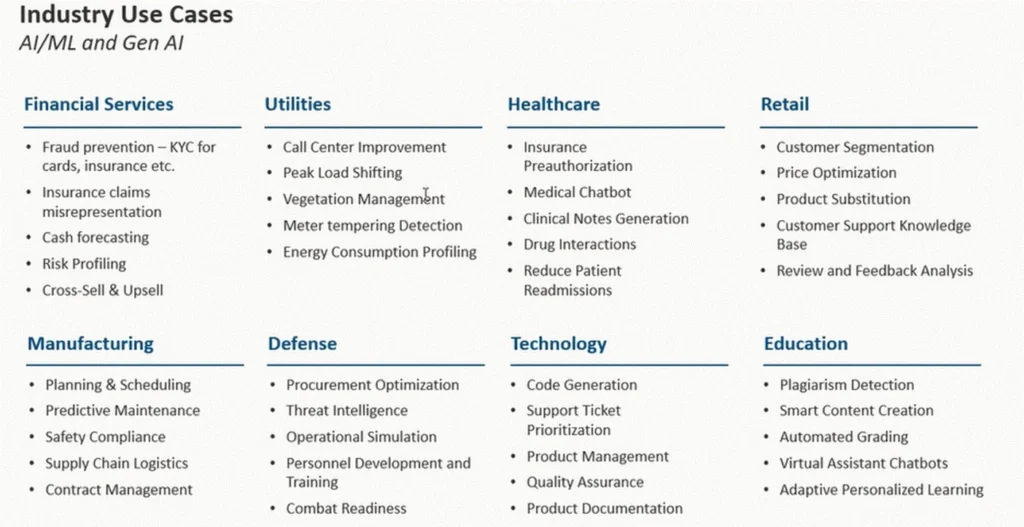
From AI‑Enabled to AI‑Sophisticated: What’s Changing?
The foundational AI‑enabled systems and models have evolved into AI‑sophisticated platforms, going from a supportive tool to a proactive, strategic partner in decision-making and enterprise transformation. The push for more sophisticated AI is growing fast, with the following significant changes already making a big difference:
Understanding the context and working across ERP modules
Instead of siloed automation, AI interprets workflows holistically, connecting IT, finance, supply chain, and customer operations to deliver insights that drive enterprise-wide efficiency.
Integrating AI into the user experience
Personalized dashboards, adaptive interfaces, and conversational assistants are the new normal, enabling employees to interact with systems in natural language and receive tailored responses based on their specific questions.
Emphasizing ethical AI and sustainability frameworks
Enterprises are taking fairness, transparency, and carbon-consciousness into account when designing AI initiatives, including governance and ensuring that innovation aligns with social responsibility and environmental impact.
Guidelines for Adopting AI‑Driven Hyper‑Automation
Hyper‑automation requires readiness, integration, and collaboration to maximize enterprise‑wide results. These guidelines provide a roadmap for IT leaders ready to embrace the next wave of intelligent automation:
- Assess Organizational Readiness
Begin with an evaluation of your current IT landscape. Identify processes most likely to benefit from automation, such as repetitive workflows, and ensure the underlying data is clean, consistent, and accessible. Poor data quality will undermine even the most advanced AI models. - Prioritize Integration Across Systems
Focus on seamless data flows between ERP modules, eliminating silos that compromise AI accuracy. Integration ensures that predictive insights and automated actions are based on a unified view of your entire organization. - Start with High‑Value Use Cases
AI‑generated marketing messages and intelligent customer support are practical entry points that demonstrate immediate ROI. Once these initiatives prove successful, expand into more complex AI agents capable of orchestrating cross‑departmental workflows. - Engage a Trusted Partner
Partner with experts, like Data Intensity, for end-to-end help, from navigating implementation, to managing organizational change, to establishing monitoring frameworks for ongoing performance. This partnership can also ensure your automation strategies are aligned with business goals and compliance requirements.
How Data Intensity Supports Hyper‑Automation
Data Intensity’s deep experience with Oracle workloads positions us to help organizations adopt and optimize AI‑driven features. Our managed services include:
- License management – We assist with auditing your existing Oracle licenses and ensuring compliance in the cloud to free IT budgets for new AI initiatives.
- Integration – We support Oracle Integration Cloud and other platforms to connect legacy and modern systems, enabling real‑time data flow essential for AI models.
- Implementation – We help clients move to the Fusion Cloud environment, where AI-powered, hyper‑automation features are available.
To meet the demands of accelerating digital transformation, hyper‑automation in Oracle Fusion Cloud is delivering tangible impact today, not years down the road. Yet this is only the beginning, the tip of the iceberg. Hyper‑automation represents the first layer of what’s possible; the true potential lies in how AI and related technologies can reimagine computing, decision‑making, customer engagement, and operational resilience across the distributed enterprise.
We encourage you to explore the transformative power of AI assistants, bots, and generative services while leveraging the expertise of partners like Data Intensity to maximize value. In addition to enabling hyper‑automation, we help CIOs and IT leaders unlock the broader spectrum of AI capabilities, from predictive intelligence to autonomous operations, by charting a future-ready roadmap for wherever AI takes you.